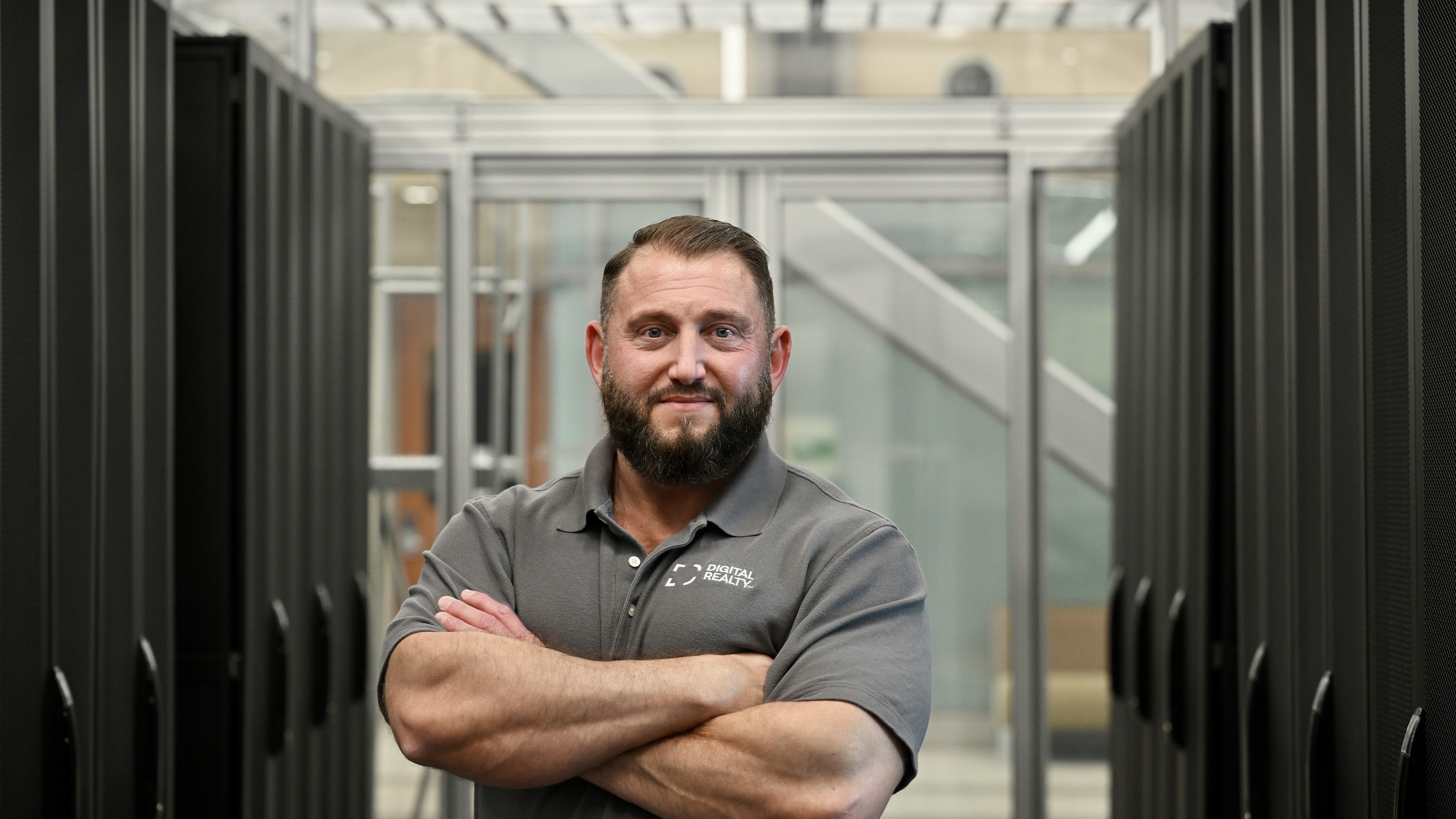
We had a chance to chat with Ted Bourne, currently juggling NOVA's Engineering Technology Career Scholars program and a full-time data center technican position at Digital Realty after a succesful winter intership there. Ted has recently switched careers to pursue data center operations, drawing on experience as well as education to ensure a succesful path forward in his new career.
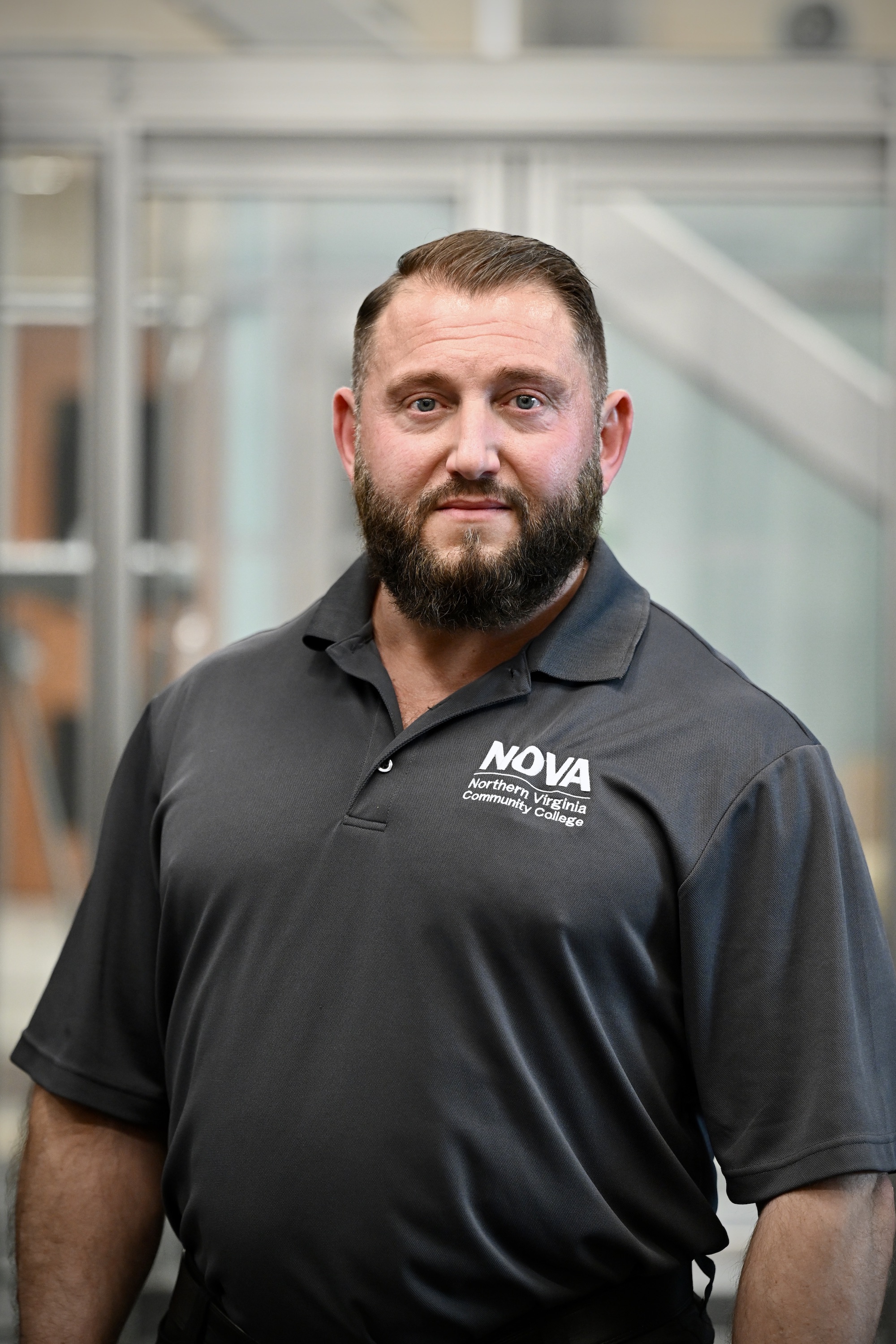 Ted, tell us a little about yourself:
I grew up in Holland and completed most of my schooling there. I originally attended culinary school and spent many years working in the kitchen industry. In addition to that, I gained experience managing a resort, where attention to detail and maintaining high standards were part of daily operations. I moved to the United States in 2014, which eventually led me to pursue a new professional path.
Why did you come to NOVA for your education?
I first heard about the program through a teacher who had pamphlets about the NOVA Engineering Technology Career Scholars program. After doing some research and learning more about what the program offered, especially the direct connection to hands-on technical training and real career opportunities, I knew it was something I had to apply for. It felt like the right path to transition into a new field with strong growth potential.
Tell us about your experience in the ET Career Scholars program and how it has benefitted you.
It has been a very interesting experience. I can honestly say I have never done anything quite like this before. From the classroom instruction to the hands-on lab work and even the interview preparation, everything is structured to prepare you to step into an interview confidently and secure an internship once you complete the program.
The number of doors this program opens is impressive. For me personally, it connected me with the right company and the right people, which ultimately led to a position in the data center field. I do not think I could have transitioned into this industry as quickly without the support and structure of the program.
Why is Data Center Operations important and why should people pursue it as a career?
Everything runs on data now. From banking systems and hospitals to government infrastructure and emergency services, data centers support the backbone of modern life. They are just as essential as power plants and water systems. If a data center goes down, the downstream impact can affect millions of people. That level of responsibility is what makes the field so important.
Choosing a career in Data Center Operations in 2026 is, in my opinion, a very smart and secure move. The industry is growing at an incredible rate, especially here in Northern Virginia, which is known as the data center capital of the world. Companies are constantly expanding and hiring.
The work itself is a mix of hands-on and knowledge-based troubleshooting. On any given day, you might be working with large-scale HVAC systems, monitoring electrical distribution throughout a facility, or supporting critical infrastructure systems. There is also significant room for growth. I have personally seen people move up several positions within just a few years. On top of that, the starting pay is very appealing for someone entering the industry fresh and willing to learn.
What is it like working together with many other students in a cohort who are doing the same thing you are?
Working alongside other students in a cohort has been one of the most valuable parts of the program. Everyone is working toward the same goal, which creates a strong sense of teamwork and accountability. You are not doing it alone, and that makes a big difference.
I am a little older than some of my classmates and was fortunate to secure a position in the field early on. Because of that, I try to share as much practical insight as I can about what the job is actually like and what employers are looking for. At the same time, I learn just as much from them. Everyone brings different strengths, experiences, and perspectives to the table.
While still in ET Career Scholars, you took on a winter internship at Digital Realty. How did that come about, what did you do, and what did you learn?
I noticed there was a winter internship opportunity posted through NOVA and decided to apply because I believed it would give me hands-on experience that would help me better understand the theory we were learning in class, especially going into the second semester. Shortly after applying, I was invited to interview, and I was grateful they decided to move forward with me. I started in mid-December.
During my internship, I was able to see firsthand how technicians monitor and maintain critical systems throughout the facility. I observed generator runs, spent time in the uninterruptible power supply rooms, and assisted with checking HVAC systems. We covered nearly every major infrastructure component. Being able to connect real-world systems to what I was learning in class made everything click at a much deeper level.
I learned a tremendous amount during that time, and I also realized how much there still is to learn. The experience reinforced how important both classroom knowledge and hands-on training are in this field.
As an ET Career Scholar at NOVA and Data Center Technician at Digital Realty, how do you balance your time and energy between work and education?
Balancing work and school has required structure and discipline. Both environments demand focus and accountability, so time management has become extremely important for me.
I plan my weeks carefully and prioritize what needs attention first, whether that is coursework, lab preparation, or responsibilities at work. The benefit of working in the field while studying is that they complement each other. What I see on-site reinforces what I learn in class, and what I learn in class helps me better understand what I see at work. Having a clear goal in mind makes the effort manageable and keeps me motivated.
Tell us about the importance of interpersonal skills in a tech job, both at NOVA and Digital Realty.
Interpersonal skills are extremely important in this field and are likely one of the reasons I was able to secure my position despite coming into the industry with no prior technical background. Technical skills can be taught, but communication, professionalism, and the ability to build strong working relationships are just as critical.
In a data center environment, we are responsible for monitoring critical infrastructure 24/7. If something happens, such as a power issue or system alarm, the team must respond quickly and in a coordinated way. Clear and effective communication ensures everyone understands their role and the situation at hand. In mission-critical operations, there is very little room for confusion.
Those same skills apply at NOVA. Being able to communicate openly with instructors and collaborate with my cohort has made the learning process more effective.
How did your past career help you in your new career?
During my interview, I leaned heavily on my previous experience managing a resort. In that environment, attention to detail was everything. Each room had to be inspected carefully to ensure it met quality standards, and we followed structured checklists to maintain consistency. Even during busy or hectic periods, we had a process and stuck to it.
That experience translates directly into Data Center Operations. In both environments, there are established procedures, standards that must be maintained, and very little room for oversight. Being able to stay organized, follow processes precisely, and pivot between tasks while remaining calm under pressure is critical.
Where do you see yourself in five years?
In five years, I see myself continuing to grow within Digital Realty. One of the things I appreciate most is that the career path for a Data Center Technician is clearly structured. There is transparency around expectations, performance, and advancement opportunities.
My goal is to continue developing technically, take on more responsibility, and move up step by step within the organization. The opportunities are there, but they require consistency, continued learning, and a strong work ethic.
What is your advice for people considering a career change?
My advice is to take the first step. If you feel drawn to the field, explore it seriously. My journey is proof that it is possible to transition into this industry without prior technical experience. It requires commitment and planning, but it can absolutely be done.
If you are unsure where to begin, NOVA is a great starting point. Speaking with an academic advisor or career counselor can help you map out a clear path. Once you decide, commit fully to the process and trust that steady effort will pay off.
What is your advice for NOVA students taking the next step into a tech job?
Take full advantage of the resources NOVA offers. Identify the specific role you are interested in and choose courses that align with that path. Attend networking events. Those events led to multiple job opportunities for me. Showing up and building connections matters. Have your elevator pitch ready. Be able to clearly explain who you are, why you are interested in the company, and why you would be a good fit. Practice it until you feel comfortable and confident.
What do you like to do in your spare time?
I try to stay active and make time for the people closest to me. I make sure to get at least one gym workout in each week and spend quality time with my wife and our two French bulldogs. If I am lucky, I can fit in a movie and a nice dinner out as a small weekly reward.
With a busy schedule, having a reset day is important. Taking time to rest and recharge helps maintain balance and focus.
Other thoughts?
I think we covered some great topics. I hope my answers help anyone who may be unsure about taking the step into the data center field. It is a growing industry with real opportunity, and programs like ET Career Scholars make that transition much more achievable. I am grateful for the experience so far and excited to continue learning and growing in the field.
Learn more about ET Career Scholars at NOVA. Applications for the new cohort are available through March 27.