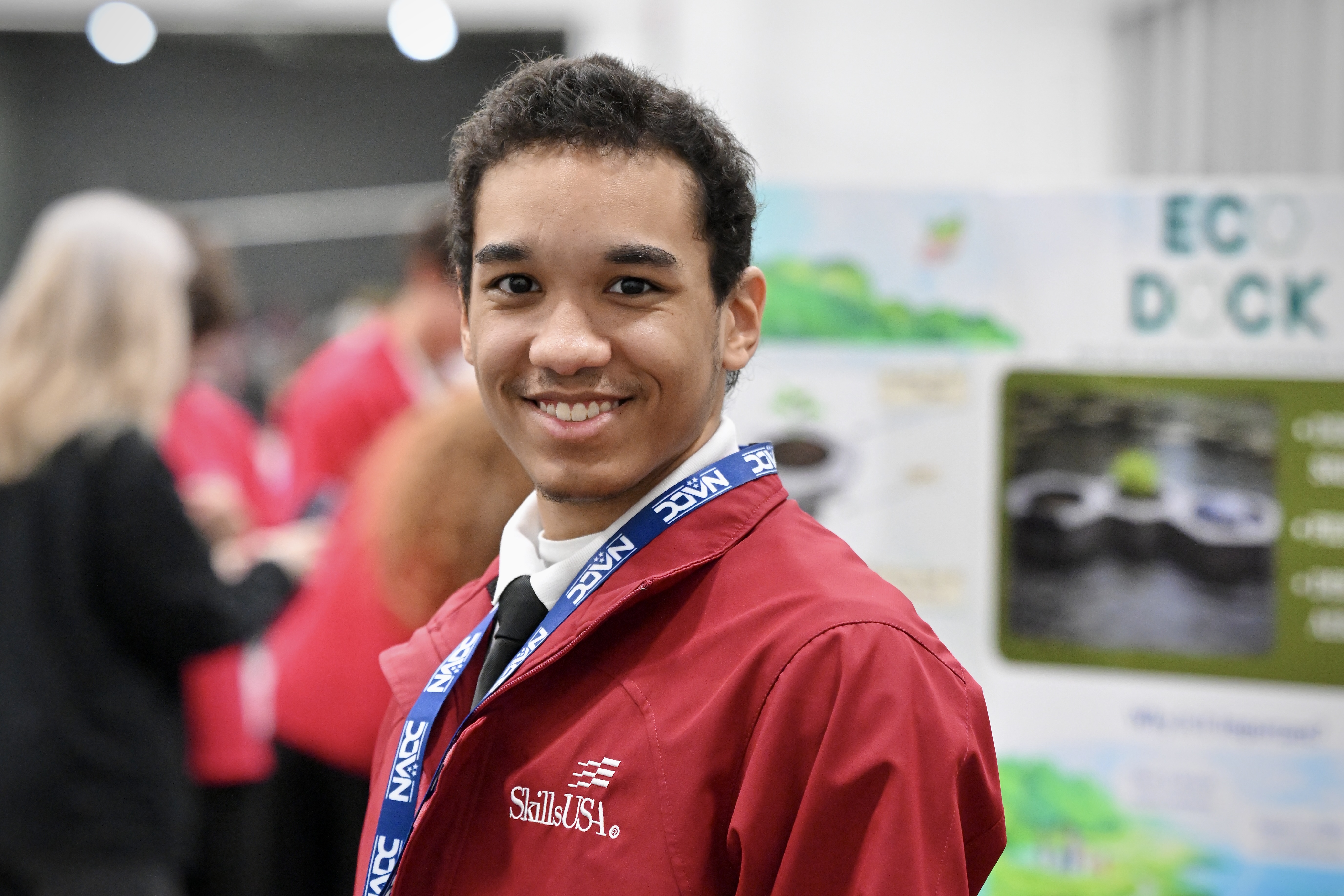
From discovering a passion for computer science during his final semester of high school to earning prestigious scholarships, leading NASA competition teams, mentoring the next generation of STEM students, and securing a software automation internship with Micron Technology, Aidan Hoo has made the most of every opportunity at NOVA. As a NOVA Presidential Scholar, Honors student, Phi Theta Kappa member, and future Virginia Tech Hokie, he has combined academic excellence with leadership, service, and hands-on industry experience. We talked with Aidan to discuss his journey, the experiences that shaped his career goals, and his advice for students looking to maximize their time at NOVA.
Tell us a little about yourself. What inspired you to pursue computer science, and what led you to NOVA?
During my last semester in high school, I learned that the very thing I've been avoiding due to how challenging it looked was the career I wanted to pursue. Then, NOVA seemed like the best medium for achieving my goals in computer science.
You have accomplished an incredible amount during your time at NOVA. Looking back, what experience has had the biggest impact on your growth as a student and leader?
NOVA has helped me achieve practically everything on my resume; that includes competitions, clubs, careers, scholarships, and fantastic networking opportunities. I can't choose just one, but I can confidently say that the best thing NOVA has done is allow me to experience everything I've missed while in high school.
As a NOVA Presidential Scholar, Honors student, and Phi Theta Kappa member, how have these opportunities challenged you academically and personally?
Becoming a NOVA Presidential Scholar, an honors student, and a Phi Theta Kappa member reminded me that I can achieve incredible things so long as I take the initiative to apply.
You served as the student team leader for NOVAflair during the NASA ORBIT 2026 Challenge. Can you tell us about the project, your role, and what it was like leading a successful team?
During the NASA ORBIT competition, I was a database manager, a UI/UX designer, a software engineer, an accountant, a presenter, and briefly a CEO of a firefighting drone. With all these different hats, leading a team of friends has certainly made my job a lot easier.
You've spent time mentoring K–12 students through STEM outreach and the NASA App Development Challenge. Why is mentoring important to you, and what have you learned from helping younger students explore technology?
Had I known about the joys of software engineering when I was younger, I would have accelerated my career tenfold. So, I give others these opportunities, and I enjoy doing so, hoping that, just maybe, I can inspire future engineers early.
You've earned both bronze and gold medals at the Virginia SkillsUSA Championships. What did those competitions teach you about teamwork, problem-solving, and performing under pressure?
Those SkillsUSA competitions taught me that the value of a product is only as good as the team that's making it, that problem-solving comes from the people who are willing to make the product come true, and that pressure is no excuse to give in.
From participating in NASA's Community College Aerospace Scholars program to receiving the Virginia Space Grant Consortium Scholarship, you've had several opportunities to engage with NASA-related initiatives. How have those experiences influenced your educational and career journey?
NASA has provided me with NCAS, a chance to mentor middle-schoolers for the ADC, a scholarship with the VSGC, and the ORBIT challenge. Each of those fantastic experiences narrowed what I did and didn't want to do regarding a career in software by giving me a justification to work on what I now know.
Receiving the Department of War SMART Scholarship is an incredible achievement. What does this opportunity mean to you, and how will it help shape your future career?
I see the SMART Scholarship as an accelerator that allows me to focus on the work, I've been so excited to do, but couldn't because of jobs. Not only that, but I was guaranteed a job based on my potential in the very thing I love doing, software automation.
Your internship at Micron Technology gave you hands-on experience in software automation and manufacturing systems. What projects or accomplishments are you most proud of, and what did you learn from working in an industry setting?
The projects I'm most proud of at Micron are the same ones I put at the top of my resume. From a project that caught barometric pressure spikes long before they happen to a simple notification service that alerts when wafer lots are diverging, they're the same projects I used my prior skills in software to benefit an entire company.
How has NOVA's Computer Science program prepared you for your transfer to Virginia Tech and for a career in software engineering?
Aside from the many competitions, leadership opportunities, and coursework while at NOVA, I've also developed my soft skills in networking. These soft skills allowed me to research the best courses from others, invest my time wisely through apps I'd never heard about, and eventually accept my transfer to Virginia Tech.
You've balanced rigorous coursework with leadership roles, competitions, internships, and mentoring. How do you stay organized and motivated while managing so many responsibilities?
For staying organized, I use to-do lists and calendars. There's nothing special there. For staying motivated, I like to think back during my time in high school and realize that I'm not the same person who goes home and plays video games until bed, who takes electives they think they'll enjoy knowing it won't be a career, and who dreams about the day they'll be as productive as I am now. I'm motivated knowing those aren't dreams anymore, but instead the reality I choose to live in.
As you look toward the future, what career do you hope to build for yourself, and what experiences have helped shape that vision?
The career I've been aiming for ever since my internship at Micron has been focused on software automation engineering, and I like to think that all my experiences before then have been leading me up to this realization.
Who has had the biggest influence on your journey so far—whether a professor, mentor, teammate, or family member—and what impact have they had on your success?
The biggest influences on my journey have been the mentors who were willing to teach me along the way. That includes professors who encouraged me to apply for opportunities, teammates who taught me how to collaborate, supervisors who trusted me with work, and family members who supported my decisions. Had I not listened to them, I certainly wouldn't be where I am today.
What advice would you give to current or future NOVA students who want to take advantage of internships, scholarships, competitions, leadership opportunities, and other experiences outside the classroom?
The biggest thing I see students do is nothing at all. A lot of them don't participate in external opportunities, network, or apply themselves for one reason or the other. This is coming from the perspective of someone who's lived through it before, mentored K-12 students, and has seen it happen as they grow up. The best advice I can give to those students is to try.
Where do you see yourself five to ten years from now, and what are you most excited about as you begin the next chapter at Virginia Tech?
Ten years from now, I see myself running a successful software company offering services I wish I had back in high school, and I'm excited that I'll be entering Virginia Tech with this mindset.